Showing posts with label Ethics. Show all posts

Saturday, March 8, 2014

Reuse Your Stuff and Revamp Your Mindset

Can’t bring yourself to toss that ultra-soft, threadbare T-shirt you’ve had since the early 80s? Does your throat catch when it comes time to check out at the grocery store and you’ve forgotten your cloth bags? Do you feel a sense of dread that teeters on compulsion when faced with having to buy retail? Then just relax, because you’re in some pretty awesome company with Alex Eaves. The mastermind behind Stay Vocal’s principle has been inspiring people to reuse and regenerate since he was a kid; if he could influence folks to pay attention at that age, it’s no wonder how he’s become a go-to guy for the growing reclaim movement, collecting awards and accolades along the way.
"Every day, I live and breathe reuse. It's how I dress: from vintage USA made Chuck Taylors to used jeans to the shirts that I sell. It's how I cut my hair: I donate it to charities who reuse it, like Matter of Trust. It's how I shop: I never leave home without my reusable bag and mug (which is good, because I drink A LOT of coffee)."
Alex’s long-time obsession with sports, music, skateboards and T-shirts created an amalgam of reuse potential that eventually spawned the popular Green America certified ReUse apparel company known as Stay Vocal, whose mission has recently spread to redirecting young minds toward embracing this philosophy. His soon-to-be kids workshop will seek to change how children think about product regeneration (not so much toward recycling since that’s still the act of throwing things away). The “Reuse Pro” will drive home his message by having his young audience craft reusables like toilet paper tubes into animals, puppets, presents, etc. they can easily make with or without their parents.

Homeless dogs have also firmly planted themselves on Alex’s radar as he incorporates animal adoption in his mission to reach and teach about giving products and pets a second chance.  I guess you can say Alex is somewhat of a magician the way he breathes new life into what others throw away. But he’ll be the first to tell you that what he does has nothing to do with illusion and everything to do with awareness. Some immediate campaigns Alex is undertaking include encouraging Dunkin’ Donuts to offer discounts to patrons who bring their own reusable cups to reduce ever-increasing environmental damage from polystyrene foam cups; and marketing his “Water Saver” T-shirts as a way to offset the 400 gallons of water it takes to grow the amount of cotton used for a single new T-shirt.

All this only scratches the surface of Alex’s penchant for pioneering the reuse concept until it becomes commonplace rather than innovative. See what else he has up his reproduced sleeve on Stay Vocal’s Facebook page (where there’s a 10% off purchase coupon waiting for you), Alex’s Facebook page (where you can see him make more amusing faces) and Twitter.

Tuesday, January 21, 2014

Not Your Grandma's Rummage Sale

There's no rapture quite like unearthing a barely broken-in pair of Sorel hiking boots for $30 (and yes, they're also the right size, so no need to stuff socks in the toes). And the bliss that comes with locating a favorite pair of Rider's comfort fit jeans the company no longer makes is beyond compare; you smile with suppressed giddiness as they swing happily on the hanger, while your eyes are drawn to the dangling tag that reads "$5."

"Nearly New" to "Well-Worn"
The "gently used" quality of vintage and secondhand clothes punctuates the value of thrift shopping: while there is always the potential to come home empty-handed, that mad anticipation of what prized possessions may await makes the hunt as thrilling as the find. Sure, there's a big difference between junk stores and potential treasure troves, but don't be too quick to write off the smaller, independent shops just because they don't have as much eye appeal; since many people avoid these little gems in favor of more popular names, the inventory is not nearly as picked over.

Unleash Your Inner Philanthropist
Scoring some of your best threads is only one benefit of shopping thrift stores, because the money you spend supports many different charitable organizations from animals and abuse victims to feeding the hungry and housing the homeless. Some non-profit groups rely solely upon selling donated goods as the financial lifeline that keeps them operating, so remember to ask for a tax receipt when you contribute to your local resale shop
.


Teach Your Children Well
We all strive to impart our kids with a sense of social responsibility, yet they're constantly bombarded with conflicting outside influences that can counteract our efforts. Introducing them to the world of recycled apparel not only gives the opportunity to budget without compromise, but it also broadens their worldview. Supporting thrift and secondhand shops with consumer dollar power is a surefire way to spark community spirit while giving a good turn to local groups doing good. And who knows -- teens may even want to volunteer their time behind the counter after finding out they get benefits like a great discount and first dibs on incoming merchandise. :)

Find a shop near you with the National Thrift Store Directory, and arm yourself with 12 how-to tips to make your shopping excursion more successful.

Monday, November 18, 2013

Whose Life is Worth More?

If given a split second to decide which people are rescued from a 2-car collision where an explosion is imminent, it's likely you'll grab those nearest your reach. But what if one vehicle is shuttling a global leader, popular celebrity or wealthy businessman, while the other holds several college freshmen? Would you grapple with your conscience about whether one life holds more value from a "greater good" standpoint?

Are You Better Than Me?
Utility requires society to act on the benefit of the majority; while siding with the greater good is not necessarily best for all, it is alleged to be the most equitable under general circumstances. 
Utilitarians will argue against the claim their social philosophy is merely totalitarianism in disguise, being there is simply no way to satisfy 100% of any group. By appeasing the majority, more people are served at the minority's expense, an unfortunate situation that often leaves the same individuals to adapt to –- or be detrimentally impacted by -- the greater good.

The main tenet of utility, according to 
Brue et al, is rational self-interest rather than selfishness, because "increasing one's own wage, rent, interest, or profit normally requires identifying and satisfying somebody else's wants," such as when parents pay their children's college tuition. Another way to understand this is by examining the meaning of altruism, which by today's standards has transformed into a philanthropic definition from its origin of perpetuating the species. This biological reality is easily demonstrated by how a bee stings an intruder, ultimately forfeiting its own life to protect the queen and hive.


Because society is fundamentally based upon performance and profit, it's not difficult to perceive utility as an opposing force to our altruistic nature. So many contemporary societies still endure incredible poverty, disease and homelessness despite global resources fully capable of feeding, clothing, educating, housing and medicating the suffering masses.

That Pesky Moral Compass
Warren Quinn, author of "Actions, Intentions, and Consequences: The Doctrine of Doing and Allowing," notes how the cloud of dispute swirling around this sociopolitical disgrace can quickly spin out of control when emotions override the greater good. Ask yourself what you'd do if you were in the following hypothetical scenario.

Engineer Bill is faced with the most difficult decision of his life: does he avert the runaway trolley to save little Sarah who is caught on the tracks at the expense of 100 passengers headed for certain death if he switches tracks
? Or does he spare those hundred people in exchange for one little girl's life? Utility compels Engineer Bill to save the passengers by forfeiting Sarah, yet this does not relieve him from struggling with his battered moral compass. Harming someone is inevitable in this situation, but the question is whether making the least damaging choice is always the best decision.

Clearly, the vast opposition between utilitarianism and ordinary morality creates a disturbing issue within Engineer Bill that forces him choose between the value of different lives. But as Wendler duly points out, "our attitudes in this regard are based on a rational cost/benefit analysis. To that extent, these attitudes do not provide an ethical argument" for exposing some people to certain risks for the benefit of others. Nemo Taylor provides a lasting reminder when faced with the choice between social mandate and ordinary morality: "Don't do the right thing out of some bland sense of duty or obligation. Do it because you recognize it's the only way to truly be happy and content with your own life."


Bird photo by Greg Kowalczewski
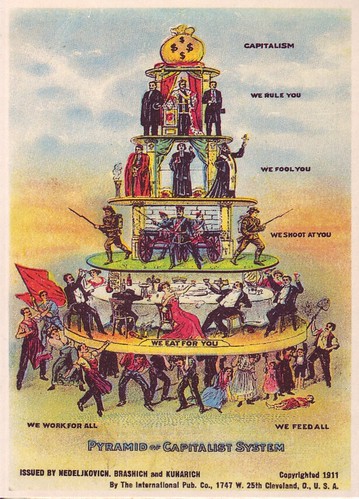
Pyramid graphic by Gilbert Alter-Gilbert

Saturday, June 29, 2013

The Importance of Workplace Hierarchy

The need for organiza-tion, unity and consis-tency is paramount to any business or industry to stave off chaos; when a chain of command is not maintained within the structural unit of authority, stability is challenged as subordinates assume decision-making roles. While the idiom "too many cooks spoil the broth" speaks to the need for defined roles and responsibilities along the entire chain, there is still room for a more collaborative approach beyond the rigidity of traditional hierarchy.

Empowerment
Traditional management and leadership practices have evolved considerably to incorporate a more collaborative dynamic that not only favors hierarchical strength but also bolsters workforce productivity. The chain of command doesn't have to be rigid to be successful; a strong and empowering hierarchy positively pushes the comfort zone by keeping the labor pool learning, inspired, and communicating.

Checks and Balances
The system of checks and balances perpetuated by a well-functioning workplace hierarchy helps to eliminate problems that otherwise might develop when individuals address situations meant for management. For example, a subordinate who makes a decision without first consulting his superior may create a negative outcome if he doesn't have all the pertinent information to make that call.

Ineffective Hierarchy
A company's health index starts at the helm and works downward to include what many organizations consider the inconsequential bottom workforce layer. As such, it's difficult for employees to respect corporate hierarchy when those in charge fail to recognize and acknowledge weak links in the upper echelon. Management is not exempt from accountability any more than those lower on the command chain; leaders who rely on subordinates to absorb the consequences of their ill-advised decisions threaten the relationship between organizational culture and its human capital.

Learning from Real Life
Popular culture has been instrumental in demonstrating the importance of workplace hierarchy, with the reality show Undercover Boss being one of the most enlightening examples. A common denominator among the show's featured CEOs and company presidents is how nary a single one is in touch with his or her organization's daily operations. Time and again these commanders discover sizable weak links throughout the company chain that necessitate immediate damage control mode.

Originally written for and published by Demand Media
Photo credit: Jupiterimages/Polka Dot/Getty Images

Friday, June 28, 2013

Moral Issues About Dating Coworkers

Interpersonal relationships play a critical role in daily workplace operation; without the ability to create rapport, employees may not establish strong communication. Given how much time people spend in the workplace, it's easy to understand the lure of dating coworkers; when those working relationships cross over into office romances, however, the moral component of such intimate interaction comes into play.

Policy
The desire to curb romances with a no-dating policy has increased with the growing awareness of sexual harassment in the workplace. This heightened awareness aside, companies are not jumping on the no-dating bandwagon as much as it might seem; just 12 percent of survey respondents in 2003 implemented such a policy, according to the American Management Association (AMA), with the majority specifically prohibiting morally questionable boss/employee fraternizing. Even with such a rule in place, there may be little legal power to enforce it if the state considers it privacy infringement. To sidestep this possibility, employers can impose an ethics code that more solidly supports the company's stance.

Hostile Work Environment
The ethical components of an office affair can impact other employees if it's known that one or both workers are cheating on their spouses with another staff member. The workplace can also turn hostile once the affair is over and the one-time lovers are not emotionally capable of working in the same space. Moreover, the burden of liability may fall upon the employer if one of the romantic pair files a harassment complaint that's not immediately addressed and rectified.

Turning a Blind Eye
While employers may not be happy with knowing their subordinates are fraternizing, they may respect the couple's privacy as long as the relationship does not detrimentally impact either employee's job performance. Should such concerns as favoritism from one toward the other, arguing in the office or decline in productivity arise, the boss has reason to step in.

Legal Aspects
What employees do on their own time is beyond the scope of workplace policy; however, once the relationship spills over into office space, the amorous coworkers cross a line that takes them into more legally stringent territory. For example, if they exchange personal and/or intimate messages while using a department computer on company time, the employer is within rights to take action as long as an electronic messaging policy is in place.

Originally written for and published by Demand Media
Photo credit: Brand X Pictures/Brand X Pictures/Getty Images

Wednesday, June 26, 2013

Modern Theories on Workplace Ethics

To live within a given society is to conform to the ethical components dictated by its governing culture. This same philosophy applies to the organizational environment, whereby workplace ethics is an ever-evolving entity that can be evaluated from a number of theoretical dichotomies.

Norms
Cultural values dictate workplace ethics and encourage staff to behave in certain ways. Adhering to these corporate social norms provides a structured path for people to follow; without this man-made construct, companies would have greater difficulty maintaining a socially and psychologically healthy environment. Breaking social norms, such as eating another employee's refrigerated food or undermining a fellow staffer's performance, indicates overstepping very specific guidelines that mandate certain behavioral expectations within that particular workplace.

Utilitarianism
In its raw form, utilitarianism might seem to uphold everyone's best interest, but in reality it benefits a greater number of workers while compelling the rest to adapt to majority rule. Since it is highly unlikely to appease everyone in any given workplace, the utility theory serves to satisfy needs of the many over the few, and may even be construed as a form of Darwin's survival of the fittest.

Deontology
The intrinsic value of good will — behavior that is not dependent upon an outcome to justify its occurrence — is the basis of deontological theory. This Kantian perspective applies to workplace ethics by highlighting man's need to reap a perceived value for doing what's considered a social and moral obligation. For example, an employee helps a coworker reach an important deadline without expecting recognition for his efforts.

Egoism
In stark contrast to deontology, egoism gives people permission to consider only what benefits their personal needs. This theory can create a hotbed of contempt in the workplace due to its lack of social responsibility — being aware of the impact your actions have upon the workplace as a whole. Ethical egoists believe that no reasoning can overrule what is otherwise the moral and righteous actions all human beings are expected to uphold.

Originally written for and published by Demand Media
Photo credit: Jupiterimages/liquidlibrary/Getty Images

Tuesday, May 28, 2013

Just Cause for Turning Down a Job Interview While on Unemployment

Obtaining unemployment benefits may be a standard next step to bridging the financial gap when you're jobless through no fault of your own, but those subsidized paychecks are not automatically tendered without some serious effort on your part. Unemployment compensation is granted to those job seekers who, once deemed "able and available" for suitable work, do not turn down an interview for any job without "good cause."

Proving "Able and Available"
Being able and available means you possess marketable skills. While it's not your responsibility to identify available jobs, you do have to demonstrate there is a market for your specific experience. For example, creating matchstick animals may be an entertaining talent, but there is no demand for it within the labor sector. Able and available also speaks to your physical capacity to actually carry out the work, as well as having a dependable means of transportation to get to and from the job.

Imposing Job Restrictions
Job seekers are allowed to establish certain boundaries when it comes to the type of jobs they'll accept and still be considered able and available. Health issues, for instance, can dictate whether a position is suitable where there is heavy lifting or unhealthful environmental factors, such as allergens. You may also cite lack of transportation as the reason for only seeking jobs within walking distance, but the onus is on you to demonstrate reasonable attempts to rectify the situation prior to requesting a restriction.

Suitable Work
Suitable work is determined by courts and unemployment compensation referees after considering various factors of your specific situation. These can include work experience and training; proximity of home to job; why and how long job seeker is out of work; plausibility of securing a job close to home in skilled profession; previous wages; job market climate; normal occupational pay rate; and residence permanency.

With and Without "Good Cause"
Refusing a job for "good cause" may include a mismatch of skills to position; physical inability to complete required tasks of that particular job; conflict between religious beliefs and job requirements; lack of transportation; and inability to secure quality childcare during work hours. You must make reasonable effort to rectify the latter two before refusing a job. Suitable jobs refused without good cause can cost job seekers their unemployment compensation when, for example, full-time employment is offered yet only part-time is wanted or vice versa, and refusing to accept a lower pay rate than previously earned.

Photo Credit: Goodshoot/Goodshoot/Getty Images
Originally written for and published by Demand Media

Thursday, November 29, 2012

Shelter Pets + December Adoptions = Holiday Cheer

The huge global movement encourag-ing people to reuse rather than discard isn't limited to clothing and plastic shopping bags, because restoring the health of this planet and its inhabitants isn't just about saving inanimate objects.

Sure, the need to repurpose nonliving things is vital to sustaining the world's dwindling resources, but there is an even greater call for recycling the millions of domesticated animals whose sentient lives are considered more disposable than an aluminum soda can. It is for this reason that many organizations like Best Friends Animal Society are spotlighting December as an especially good time to spread good cheer by adopting dogs and cats from local shelters and rescue groups.


The abundance of tangible benefits that comes with adoption typically includes animals who are fully vetted (spay/neuter and vaccinations at a minimum) and a basic knowledge of personality/disposition. Organizations whose dogs and cats are fostered with families offer greater insight to each animal's behavioral and medical issues (if any), as well as determine the best home dynamic to fit every canine and feline personality. The intangible benefits, however, are innumerable yet best summed up as a second chance to find the right fit.

Whether considered hand-me-downs, previously owned or castoffs, rescuing a salvaged pet instead of purchasing from a store or breeder advocates the drive toward sustainability, both locally and ethically. Plus these gently used dogs and cats come in a wide variety of sizes, ages and breeds (did you know purebreds make up 25% of all shelter dogs?), making it effortless for you to connect with just the right furry companion.

Originally written for and published by Best Friends Animal Society

Friday, August 24, 2012

Top 10 Dog Breeds With Bad Reps


Breed specific legislation in states and munici-palities across the country has targeted many types of dogs that, often through no fault of their own, are labeled as dangerous. Breeds classified under this law can cause an increase in insurance rates for homeowners or may face euthanasia.

Blackballed Breeds
Dogs of every breed respond to the stimuli presented to them, whether nurtured by love and trust or provoked by pain and fear. Certain breeds, however, are considered more dangerous than others, including the Akita, bulldog, bullmastiff, chow, Doberman, German shepherd, husky, Presa Canario, Rottweiler and pit bull, or any mix-breed combination thereof.

Size Matters?
Each of the dogs on this Top 10 list is considered large, extra-large or giant based upon breed size standards, which indicates that the bigger the dog, the more dangerous he is -- or is perceived to be. While dog breed statistics do reflect a higher number of incidents in association with the 10 breeds on this list, Dog Bite Law says that dogs of certain breeds are not born dangerous by default. "Any individual dog may be a good, loving pet, even though its breed is considered to be potentially dangerous."

Identifying a Pit Bull
The pit bull is branded as more dangerous than any other not only through misled perception but also because many people cannot identify the breed. Dogs with triangular jaws, muscular bodies and cropped ears are all lumped together as the generic "pit bull," when in fact the pit bull can be any of the following breeds: American Staffordshire terrier, English bull terrier, American bulldog, Presa Canario and Staffordshire bull terrier. The subtle differences of each one have cast them all into a much-debated single grouping based only upon how they look.

The Human Element
The common denominators among these 10 dog breeds are strength, size, independent attitude and intelligence, making them highly sought-after as guard and protection dogs, as well as combatants in the fighting ring. According to Dog Bite Law, any breed of dog is capable of biting when trained to do so; dogs whose physiques make them more popular sentries than their smaller, allegedly "non-dangerous" counterparts are often taught to attack, which brings more attention to incidents involving these particular breeds.

Originally written for and published by Demand Media

Wednesday, August 8, 2012

Disadvantages of Professionalism

It may be hard to imagine how professional-ism is a disadvantage in any capacity, but there are times when adhering to such high standards can work against an intended objective. While the tenets of professionalism -- which include behavior, integrity and accountability -- remain intact, the stringency associated with such a demanding combination may need some adjustment in order to realize a more positive outcome. The key is to remember that professionalism does not always equate to quality standards.


The Price of Professionalism
Maintaining professional standards is a costly venture when, for example, companies are compelled to provide their workers with continuing education to maintain the desired level of professionalism. Moreover, recruiting new talent may cost the company more in its ongoing quest to uphold such a strict standard; hiring an established professional can be a smarter financial decision than molding a newcomer.

Undue Tension
Leniency allows for certain situations to be addressed more suitably for the circumstances; adhering to a strict professional policy for the sake of compliance can create tension where it doesn't have to exist. Whether mandated to follow rigid dress codes, interpersonal relations or decorum, employees may feel so constrained by such stringency that the work environment becomes staid and dispiriting.

Tempered Talent
The steadfast attributes typically associated with professionalism can restrict environments that have a more creative atmosphere. The greater ingenuity and inspiration required in the workplace, the less need for unnatural restrictions in order to cultivate creativity. Advertising companies, for example, do well to employ a more casual, free-flowing approach to their professional standards, one that still emphasizes appropriate business behavior, integrity and accountability but with more flexibility.

Subjectivity
The notion of professionalism means different things to different people, which may lead one department's policy to significantly deviate from another. This lack of consistency can create an undercurrent of confusion and mixed signals when employees within the same company are not outfitted with a corresponding standard. Moreover, efforts to maintain a specific level of professionalism via micromanaging can stymie employee ingenuity and overall productivity.

Originally written for and published by Demand Media.

Wednesday, June 6, 2012

Laws & Employment Ads


Employers might have a certain idea of the person best suited for a given position, but listing these specific character-istics in an employment advertisement -- beyond the scope of a job's general description -- can land the company in legal hot water. Discrimination of any sort, either real or perceived, is at the forefront of staff recruitment to such an extent that employers must be keenly aware of how to lawfully word a job ad.


Legislative Mandate
Even with the prevalence of anti-discrimination employment laws, some employers still don't know that job advertisements fall into this legal category. According to the U.S. Equal Employment Opportunity Commission, the classifications protected from biased want ads include race, religion, national origin, color, sex, age, genetic information or disability. Pregnant women, who cannot be singled out or treated differently in the workplace, are listed as a subgroup of the gender category.


Sidestepping the Unemployed
Some employers place a time limit on how long applicants can be out of work in a given industry before they're considered unemployable; the longer a person is gone from the job market, the more likely he is to be out of touch with industry evolution. Employment attorney Ann Kieran says New Jersey's 2001 statute N.J.S.A. 34:8B-1 was one of the nation's first prohibiting companies from stating in any way, either online or in print, that those currently unemployed will not be considered. A dozen more states considered the same legal mandate in early 2012 and in February, the Oregon Legislature voted in favor of levying employers with a $1,000 fine for publishing such discriminatory job ads.


Gender-Referent Language
Advertising for a waitress rather than a food server sends a clear message the employer wants to hire a woman, which is a form of gender-referent language. A male job seeker who might otherwise apply for that job is immediately discouraged from doing so, yet cannot be legally turned away if he does. While there are limited circumstances whereby gender is a bona fide occupational qualification, such as in a prison or gender-specific health facility, the majority of employers are strongly advised to use gender-neutral job titles and descriptions in their advertisements.


Ageism
Discouraging the over-40 job seeker from applying for a non-age specific position is another form of employment discrimination. For example, the employer who advertises "recent college graduates" for a sales job that any seasoned professional twice that age can handle violates the Age Discrimination in Employment Act. Companies that use these trigger words, which also include citing specific age ranges, tread on thin ice where their liability is concerned if the position does not actually require that particular qualification.


Originally written for and published by Demand Media

Tuesday, May 1, 2012

Whose Life is Worth More?


If given a split second to decide which people are rescued from a 2-car accident where an explosion is imminent, it's likely you'll grab those closest to your reach. But what if one vehicle is shuttling a global leader, popular celebrity or wealthy businessman, while the other has several college freshmen? Does one life hold more value from a "greater good" standpoint and deserve to be saved over the others?

Are You Better Than Me?
Utility requires society to act on the benefit of the majority; while siding with the greater good is not necessarily best for all, it is alleged to be the most equitable under general circumstances. 
Utilitarians will argue against the claim their social philosophy is merely totalitarianism in disguise, being there is simply no way to satisfy 100% of any group. By appeasing the majority, more people are served at the minority's expense, an unfortunate situation that often leaves the same individuals to adapt to –- or be detrimentally impacted by -- the greater good.

The main tenet of utility, according to 
Brue et al, is rational self-interest rather than selfishness, because "increasing one's own wage, rent, interest, or profit normally requires identifying and satisfying somebody else's wants," such as when parents pay their children's college tuition. Another way to understand this is by examining the meaning of altruism, which by today's standards has transformed into a philanthropic definition from its origin of perpetuating the species. This biological reality is easily demonstrated by how a bee stings an intruder, ultimately forfeiting its own life to protect the queen and hive.


Because society is fundamentally based upon performance and profit, it's not difficult to perceive utility as an opposing force to our altruistic nature. So many contemporary societies still endure incredible poverty, disease and homelessness despite global resources fully capable of feeding, clothing, educating, housing and medicating the suffering masses.


That Pesky Moral Compass
Warren Quinn, author of "Actions, Intentions, and Consequences: The Doctrine of Doing and Allowing," notes how the cloud of dispute swirling around this sociopolitical disgrace can quickly spin out of control when emotions override the greater good. Ask yourself what you'd do if you were in the following hypothetical scenario.

Engineer Bill is faced with the most difficult decision of his life: does he avert the runaway trolley to save little Sarah who is caught on the tracks at the expense of 100 passengers headed for certain death if he switches tracks
? Or does he spare those hundred people in exchange for one little girl's life? Utility compels Engineer Bill to save the passengers by forfeiting Sarah, yet this does not relieve him from struggling with his battered moral compass. Harming someone is inevitable in this situation, but the question is whether making the least damaging choice is always the best decision.

Clearly, the vast opposition between utilitarianism and ordinary morality creates a disturbing issue within Engineer Bill that forces him choose between the value of different lives. But as Wendler duly points out, "our attitudes in this regard are based on a rational cost/benefit analysis. To that extent, these attitudes do not provide an ethical argument" for exposing some people to certain risks for the benefit of others. Nemo Taylor provides a lasting reminder when faced with the choice between social mandate and ordinary morality: "Don't do the right thing out of some bland sense of duty or obligation. Do it because you recognize it's the only way to truly be happy and content with your own life."


Bird photo by Greg Kowalczewski
Pyramid graphic by Gilbert Alter-Gilbert

Sunday, February 12, 2012

Not Your Grandma's Rummage Sale


There's no rapture quite like unearthing a barely broken-in pair of Sorel hiking boots for $30 (and yes, they're also the right size, so no need to stuff socks in the toes). And the bliss that comes with locating a favorite pair of Rider's comfort fit jeans the company no longer makes is beyond compare; you smile with suppressed giddiness as they swing happily on the hanger, while your eyes are drawn to the dangling tag that reads "$5."

The "gently used" quality of vintage and secondhand clothes punctuates the value of thrift shopping: while there is always the potential to come home empty-handed, that mad anticipation of what prized possessions may await makes the hunt as thrilling as the find. Sure, there's a big difference between junk stores and potential treasure troves, but don't be too quick to write off the smaller, independent shops just because they don't have as much eye appeal; since many people avoid these little gems in favor of more popular names, the inventory is not nearly as picked over.

Unleash Your Inner Philanthropist
Scoring some of your best threads is only one benefit of shopping thrift stores, because the money you spend supports many different charitable organizations from animals and abuse victims to feeding the hungry and housing the homeless. Some non-profit groups rely solely upon selling donated goods as the financial lifeline that keeps them operating, so remember to ask for a tax receipt when you contribute to your local resale shop
.


Teach Your Children Well
We all strive to impart our kids with a sense of social responsibility, yet they're constantly bombarded with conflicting outside influences that can counteract our efforts. Introducing them to the world of recycled apparel not only gives the opportunity to budget without compromise, but it also broadens their worldview. Supporting thrift and secondhand shops with consumer dollar power is a surefire way to spark community spirit while giving a good turn to local groups doing good. And who knows -- teens may even want to volunteer their time behind the counter after finding out they get benefits like a great discount and first dibs on incoming merchandise. :)

Find a shop near you with the National Thrift Store Directory.
Here are 12 how-to tips to make your shopping excursion more successful.

Wednesday, January 11, 2012

So Far, So Good?

Humans are transfixed with the prospect of advancement; ever since Galileo's discovery of scientific proof, the world has moved at a feverish pitch down the path of progression. While most of man's inventions and discoveries have been beneficial for perpetuating the human species, contemporary society is now teetering on a dangerous precipice of possessing too much knowledge, a line that if crossed can actually threaten global survival.

Immense controversy over clon-ing has beckoned the need for greater ethical measures when messing with genetics; that living beings can be brought into existence with DNA engineering is a concept that catapults humanity far beyond the scope of acceptable behavior.

Just Because We Can...
Joseph C. Pitt's book Galileo, Human Knowledge, and the Book of Nature: Method Replaces Metaphysics illustrates how knowledge is power; to abuse that power is to overrule man's intrinsic relationship with the universe. Galileo's discovery instigated a chain of events that even the great philosopher could never conceive; as today's scientific community hovers over the edge of molecular manipulation for alleged global benefit, 
the entire world is looking on with a combination of fascination and horror. "In Galileo, knowledge lost its speculative character. The world became predictable, and therefore manipulable."

The option for genetic engineering takes this scenario a step further with couples using in vitro fertilization (IVF). Beyond the benefit of prenatal screening for genetic diseases such as Downs Syndrome, Trisomy 21 and 13, Cystic Fibrosis, Huntington Disease and a whole host of other problems, parents are also invited to choose other elective characteristics. When this choice is based solely upon selective breeding, the otherwise blurred line of genetic tampering suddenly comes into sharp focus. 

Invisible Monster Under the Bed

How is anyone to know the far-reaching consequences of such monumental meddling? Will there eventually be a definitive way to foretell what undesirable mutations may occur before they actually happen? Scientist VJ Ehlers, who understands the vital role science plays in human evolution, also recognizes that "while the possibilities of scientific experimentation may seem limitless, there are times when society ­-- through the governmental process -­- can and should place limits on scientific experimentation."

David Bender, whose book 
Biomedical Ethics provides further insight into the danger of unchecked knowledge, points out that while an initial discovery may drive species progression, the more important disclosure is what concealed consequences are inherent to such genetic trespassing. Andrew Revkin asks the question all of us want to know: "There are two durable camps out there, those who warn that humanity has overshot and is destined to crash, like Wile E. Coyote over the cliff, and those who insist that the human traits of innovation and adaptation will get us through. Who's right?"

Tuesday, January 3, 2012

Prison Guards and Respect: Oxymoron or Reasonable Expectation?

While some of us may already work under hostile conditions, most couldn't imagine facing each day with this kind of hostility. Indeed, there's much more to being a prison correctional officer than merely watching over a cluster of social deviants; the emotional, psychological and physical attributes necessary for enduring hours of barefaced defiance can't help but jade even the strongest mettle. So how does an environment like this breed respect with such a perpetual power struggle?

Journalist Ted Conover wanted to find out firsthand just what it took to command respect from prison inmates; r
efused entry to capture this unseen community from a literary perspective, Conover takes an alternate route by training for and becoming a prison guard. What he finds on the inside at the nation's second largest maximum security prison is a world unlike anything he's ever read, which ultimately gives life to Newjack: Guarding Sing Sing.

Unexpected Outcome
One 
of the most surprising lessons he learns is that inmates have the upper hand in most situations regarding everyday tasks; being all but incapacitated by their cell block existence encourages learned helplessness and renders the guards personal servants.

"Instead of feeling like a big, tough guard, the gallery officer at the end of the day often feels like a waiter serving a hundred tables or like the mother of a nightmarishly large brood of sullen, dangerous, and demanding children. When grown men are infantilized, most don't take to it too nicely."

Conover's ability to delve deeply into the soft underbelly of his hardened prison charges speaks to the instinctual response living beings have when treated humanely. By giving inmates the same consideration as everyone else, Conover successfully reaches a level of respect other officers do not achieve. Instead of using his power to coerce a sector of society that already has serious authority issues, he instead applies a very fundamental theory of human nature. "A guard's lack of respect for the law, the title, the uniform, the families, or the prisoners will always and forever breed lack of respect for authority."

Basic Human Needs
As social animals, humans require positive interaction with others in order to develop and maintain a sense of self within the boundaries of a civilized society. When placed in situations where emotional bonding is withheld, power is one-sided or personal identity is stripped, psychologically healthy people become vulnerable to moral abandonment. The controversial Stanford Prison Experiment of the 1970s documents how social forces of power and identity sway otherwise 'normal' people into embodying the Lucifer effect.

The level of deviance and character decline is much more than anyone ever expects; in fact, one doctor who walks into the fifth day of the 6-day experiment is overwhelmed with disgust to the point of having to leave. Even head researcher Philip Zimbardo can only speculate how the experiment will inevitably conclude without the ability to control variables he can't anticipate. When he sees the undesirable transition his "guards" take with "inmate" treatment, he still allows the experiment to continue despite loud objections to the contrary.

Clearly, the human mental condition is part of a more complex interplay that exists between environmental and biological survival factors. The Stanford experiment illustrates how the line between good and evil, which is often thought to be unyielding to external influence, lives along a sliding scale that allows ethically-minded, compassionate individuals to succumb to an evil environment.


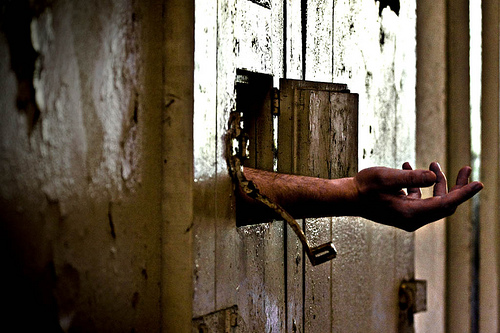
Guard patrol photo from Gawker

Wednesday, December 21, 2011

Stacking the Jury

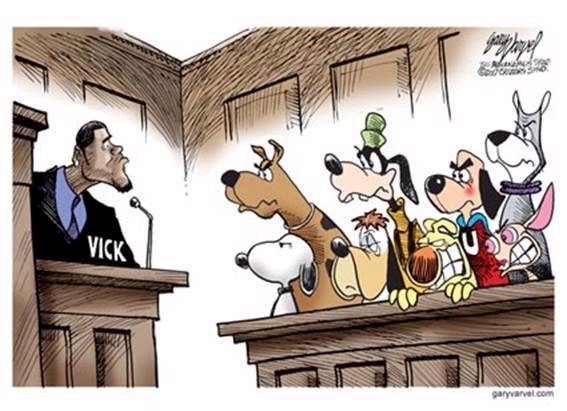
Being judged by a jury of peers is an elusive reality in today's criminal justice system, inasmuch as the selection process has become more rooted in psychological manipulation than propriety. Forensic psychologists, who play an important role in how and why certain people are chosen for duty and others are not, use an inventory of questions that often have nothing at all to do with the case being tried.

Potential jurors endure a formal examination called voir dire that determines the appropriateness of each individual to occupy a jury seat; bias of any kind earns immediate dismissal. These prejudices are often easy to detect while others require deeper inquiry to uncover, an approach that typically re-asks a particular question in several different ways to see if the person trips over the answer. 

In theory, the entire selection process occurs for the single objective of assembling a fair and impartial jury; in reality, it has become a chronic hemorrhage of the legal system that prevents getting a fair community cross-section. Forensic psychologists ask questions that draw out certain responses, which can unfairly orchestrate a jury whose collective presence disrupts any chance of impartiality against the projected ruling.

Indeed, attorneys face quite a tremendous task when it comes to safeguarding a trial outcome against rogue jurors. Not only must they educate the jury about minutiae of the case, but they must also make it perfectly clear in layman's terms. Far too many uncontrolled variables can lead to slip-ups where individual jurors are concerned, so lawyers engage in a strategy called mock or shadow jury that represent the actions, opinions and biases of a real jury before ever reaching trial. Attorneys value these training sessions in order to present their case in a more thorough manner. It also helps them to learn how different people respond in different areas of the country. However, Decaire's assessment doesn't do much to appease suspicion:

The Forensic Psychologist that investigates the social-legal components of the common law court system can provide influential knowledge to both criminal and common law cases…Many believe that a good evaluator can determine, before the case, which jurors are on their side…Since both sides can challenge potential jurors this will not usually stack the jury in the favor of either the defense or prosecution. The result is hopefully a fairly balanced jury. 
All this judicial jockeying and scientific jury selection gives a dubious perspective to the implication of injustice. No matter how exacting the forensic psychologist is when profiling a potential jury, there is simply no surefire way to determine how verdicts in a mock trial (where controlled variables are used) will foretell that of a real trial. Jurors are, after all, ordinary people who may or may not have a vested interest in the case outcome. Is it reasonable to think a mock jury can anticipate how impartial and unprejudiced the real jury will be when it comes to matters of the heart?

Moreover, there's no telling whether any member of a mock or real jury will adhere to the judge's directions when a particularly damning piece of evidence is stricken from the record. There is also no guarantee a juror will not crumble under the pressure of other jurors to make the verdict follow majority. Too many individual quirks exist among people to expect them all to respond in the same manner. Juries may rely upon common sense when it comes to sorting out the facts, but they also fall prey to their often-overwhelming sense of compassion. This reason, more than any other, is likely why so many criminals are treated with leniency despite best efforts from forensic psychologists.