Showing posts with label Nature. Show all posts

Saturday, March 8, 2014

Reuse Your Stuff and Revamp Your Mindset

Can’t bring yourself to toss that ultra-soft, threadbare T-shirt you’ve had since the early 80s? Does your throat catch when it comes time to check out at the grocery store and you’ve forgotten your cloth bags? Do you feel a sense of dread that teeters on compulsion when faced with having to buy retail? Then just relax, because you’re in some pretty awesome company with Alex Eaves. The mastermind behind Stay Vocal’s principle has been inspiring people to reuse and regenerate since he was a kid; if he could influence folks to pay attention at that age, it’s no wonder how he’s become a go-to guy for the growing reclaim movement, collecting awards and accolades along the way.
"Every day, I live and breathe reuse. It's how I dress: from vintage USA made Chuck Taylors to used jeans to the shirts that I sell. It's how I cut my hair: I donate it to charities who reuse it, like Matter of Trust. It's how I shop: I never leave home without my reusable bag and mug (which is good, because I drink A LOT of coffee)."
Alex’s long-time obsession with sports, music, skateboards and T-shirts created an amalgam of reuse potential that eventually spawned the popular Green America certified ReUse apparel company known as Stay Vocal, whose mission has recently spread to redirecting young minds toward embracing this philosophy. His soon-to-be kids workshop will seek to change how children think about product regeneration (not so much toward recycling since that’s still the act of throwing things away). The “Reuse Pro” will drive home his message by having his young audience craft reusables like toilet paper tubes into animals, puppets, presents, etc. they can easily make with or without their parents.

Homeless dogs have also firmly planted themselves on Alex’s radar as he incorporates animal adoption in his mission to reach and teach about giving products and pets a second chance.  I guess you can say Alex is somewhat of a magician the way he breathes new life into what others throw away. But he’ll be the first to tell you that what he does has nothing to do with illusion and everything to do with awareness. Some immediate campaigns Alex is undertaking include encouraging Dunkin’ Donuts to offer discounts to patrons who bring their own reusable cups to reduce ever-increasing environmental damage from polystyrene foam cups; and marketing his “Water Saver” T-shirts as a way to offset the 400 gallons of water it takes to grow the amount of cotton used for a single new T-shirt.

All this only scratches the surface of Alex’s penchant for pioneering the reuse concept until it becomes commonplace rather than innovative. See what else he has up his reproduced sleeve on Stay Vocal’s Facebook page (where there’s a 10% off purchase coupon waiting for you), Alex’s Facebook page (where you can see him make more amusing faces) and Twitter.

Monday, November 18, 2013

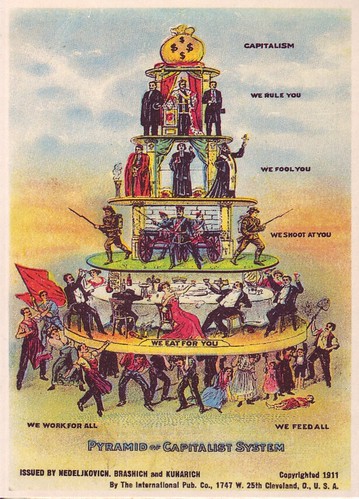
Whose Life is Worth More?

If given a split second to decide which people are rescued from a 2-car collision where an explosion is imminent, it's likely you'll grab those nearest your reach. But what if one vehicle is shuttling a global leader, popular celebrity or wealthy businessman, while the other holds several college freshmen? Would you grapple with your conscience about whether one life holds more value from a "greater good" standpoint?

Are You Better Than Me?
Utility requires society to act on the benefit of the majority; while siding with the greater good is not necessarily best for all, it is alleged to be the most equitable under general circumstances. 
Utilitarians will argue against the claim their social philosophy is merely totalitarianism in disguise, being there is simply no way to satisfy 100% of any group. By appeasing the majority, more people are served at the minority's expense, an unfortunate situation that often leaves the same individuals to adapt to –- or be detrimentally impacted by -- the greater good.

The main tenet of utility, according to 
Brue et al, is rational self-interest rather than selfishness, because "increasing one's own wage, rent, interest, or profit normally requires identifying and satisfying somebody else's wants," such as when parents pay their children's college tuition. Another way to understand this is by examining the meaning of altruism, which by today's standards has transformed into a philanthropic definition from its origin of perpetuating the species. This biological reality is easily demonstrated by how a bee stings an intruder, ultimately forfeiting its own life to protect the queen and hive.


Because society is fundamentally based upon performance and profit, it's not difficult to perceive utility as an opposing force to our altruistic nature. So many contemporary societies still endure incredible poverty, disease and homelessness despite global resources fully capable of feeding, clothing, educating, housing and medicating the suffering masses.

That Pesky Moral Compass
Warren Quinn, author of "Actions, Intentions, and Consequences: The Doctrine of Doing and Allowing," notes how the cloud of dispute swirling around this sociopolitical disgrace can quickly spin out of control when emotions override the greater good. Ask yourself what you'd do if you were in the following hypothetical scenario.

Engineer Bill is faced with the most difficult decision of his life: does he avert the runaway trolley to save little Sarah who is caught on the tracks at the expense of 100 passengers headed for certain death if he switches tracks
? Or does he spare those hundred people in exchange for one little girl's life? Utility compels Engineer Bill to save the passengers by forfeiting Sarah, yet this does not relieve him from struggling with his battered moral compass. Harming someone is inevitable in this situation, but the question is whether making the least damaging choice is always the best decision.

Clearly, the vast opposition between utilitarianism and ordinary morality creates a disturbing issue within Engineer Bill that forces him choose between the value of different lives. But as Wendler duly points out, "our attitudes in this regard are based on a rational cost/benefit analysis. To that extent, these attitudes do not provide an ethical argument" for exposing some people to certain risks for the benefit of others. Nemo Taylor provides a lasting reminder when faced with the choice between social mandate and ordinary morality: "Don't do the right thing out of some bland sense of duty or obligation. Do it because you recognize it's the only way to truly be happy and content with your own life."


Bird photo by Greg Kowalczewski
Pyramid graphic by Gilbert Alter-Gilbert

Wednesday, January 11, 2012

So Far, So Good?

Humans are transfixed with the prospect of advancement; ever since Galileo's discovery of scientific proof, the world has moved at a feverish pitch down the path of progression. While most of man's inventions and discoveries have been beneficial for perpetuating the human species, contemporary society is now teetering on a dangerous precipice of possessing too much knowledge, a line that if crossed can actually threaten global survival.

Immense controversy over clon-ing has beckoned the need for greater ethical measures when messing with genetics; that living beings can be brought into existence with DNA engineering is a concept that catapults humanity far beyond the scope of acceptable behavior.

Just Because We Can...
Joseph C. Pitt's book Galileo, Human Knowledge, and the Book of Nature: Method Replaces Metaphysics illustrates how knowledge is power; to abuse that power is to overrule man's intrinsic relationship with the universe. Galileo's discovery instigated a chain of events that even the great philosopher could never conceive; as today's scientific community hovers over the edge of molecular manipulation for alleged global benefit, 
the entire world is looking on with a combination of fascination and horror. "In Galileo, knowledge lost its speculative character. The world became predictable, and therefore manipulable."

The option for genetic engineering takes this scenario a step further with couples using in vitro fertilization (IVF). Beyond the benefit of prenatal screening for genetic diseases such as Downs Syndrome, Trisomy 21 and 13, Cystic Fibrosis, Huntington Disease and a whole host of other problems, parents are also invited to choose other elective characteristics. When this choice is based solely upon selective breeding, the otherwise blurred line of genetic tampering suddenly comes into sharp focus. 

Invisible Monster Under the Bed

How is anyone to know the far-reaching consequences of such monumental meddling? Will there eventually be a definitive way to foretell what undesirable mutations may occur before they actually happen? Scientist VJ Ehlers, who understands the vital role science plays in human evolution, also recognizes that "while the possibilities of scientific experimentation may seem limitless, there are times when society ­-- through the governmental process -­- can and should place limits on scientific experimentation."

David Bender, whose book 
Biomedical Ethics provides further insight into the danger of unchecked knowledge, points out that while an initial discovery may drive species progression, the more important disclosure is what concealed consequences are inherent to such genetic trespassing. Andrew Revkin asks the question all of us want to know: "There are two durable camps out there, those who warn that humanity has overshot and is destined to crash, like Wile E. Coyote over the cliff, and those who insist that the human traits of innovation and adaptation will get us through. Who's right?"