Showing posts with label Crime/Law Enforcement. Show all posts

Monday, August 20, 2012

Careers Without a College Degree

While a college degree has historically been the bridge to professional success, there are industries where basic training and hands-on experience are just as valuable as -- and sometimes more than -- higher education.

Hospitality
Many a teenager begins his career path at a fast-food outlet or local restaurant, actively participating in back-of-the-house operations -- dishwasher and food preparation -- or front-house customer service. This seemingly inconsequential experience can open many doors for future advancement throughout a worldwide industry that includes working as a Four Star hotel manager, restaurant owner or concierge.

Detectives and Criminal Investigators
If you have a keen eye for detail and a flair for sleuthing, the lack of a college degree won't stand in your way of a career in criminal law enforcement. Prerequisites for detectives and criminal investigators are more mental and physical than scholastic, calling for rigorous qualifications of sound mind and body. The most common path is entering the force as a police officer after successful completion of the academy program and then moving up the ranks with increased experience.

Real Estate Agent
Helping people buy and sell property can be a very rewarding and lucrative career choice. Indeed, there are few things as intimate as the place you call home, which brings a sense of personal satisfaction when clients are gratified. While real estate agents don't need a degree, they do need to be licensed and stay up-to-date on changing requirements, laws and forms through continuing education.

Computer Technology
The future is strong for those who immerse themselves in technology. With many elementary and secondary schools incorporating computer education in their curricula, young people have opportunities to develop skills that set them on the path toward a solid career without having a degree. Successful computer programmers, for example, are often self-taught. Courses in continuing education do offer advanced certification to further knowledge but in most cases, all you need is raw talent, experience and competence to land a position.


Originally written for and published by Demand Media

Tuesday, January 3, 2012

Prison Guards and Respect: Oxymoron or Reasonable Expectation?

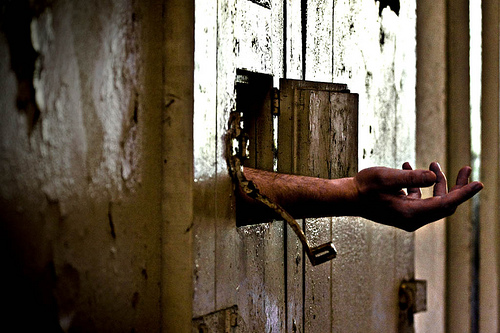
While some of us may already work under hostile conditions, most couldn't imagine facing each day with this kind of hostility. Indeed, there's much more to being a prison correctional officer than merely watching over a cluster of social deviants; the emotional, psychological and physical attributes necessary for enduring hours of barefaced defiance can't help but jade even the strongest mettle. So how does an environment like this breed respect with such a perpetual power struggle?

Journalist Ted Conover wanted to find out firsthand just what it took to command respect from prison inmates; r
efused entry to capture this unseen community from a literary perspective, Conover takes an alternate route by training for and becoming a prison guard. What he finds on the inside at the nation's second largest maximum security prison is a world unlike anything he's ever read, which ultimately gives life to Newjack: Guarding Sing Sing.

Unexpected Outcome
One 
of the most surprising lessons he learns is that inmates have the upper hand in most situations regarding everyday tasks; being all but incapacitated by their cell block existence encourages learned helplessness and renders the guards personal servants.

"Instead of feeling like a big, tough guard, the gallery officer at the end of the day often feels like a waiter serving a hundred tables or like the mother of a nightmarishly large brood of sullen, dangerous, and demanding children. When grown men are infantilized, most don't take to it too nicely."

Conover's ability to delve deeply into the soft underbelly of his hardened prison charges speaks to the instinctual response living beings have when treated humanely. By giving inmates the same consideration as everyone else, Conover successfully reaches a level of respect other officers do not achieve. Instead of using his power to coerce a sector of society that already has serious authority issues, he instead applies a very fundamental theory of human nature. "A guard's lack of respect for the law, the title, the uniform, the families, or the prisoners will always and forever breed lack of respect for authority."

Basic Human Needs
As social animals, humans require positive interaction with others in order to develop and maintain a sense of self within the boundaries of a civilized society. When placed in situations where emotional bonding is withheld, power is one-sided or personal identity is stripped, psychologically healthy people become vulnerable to moral abandonment. The controversial Stanford Prison Experiment of the 1970s documents how social forces of power and identity sway otherwise 'normal' people into embodying the Lucifer effect.

The level of deviance and character decline is much more than anyone ever expects; in fact, one doctor who walks into the fifth day of the 6-day experiment is overwhelmed with disgust to the point of having to leave. Even head researcher Philip Zimbardo can only speculate how the experiment will inevitably conclude without the ability to control variables he can't anticipate. When he sees the undesirable transition his "guards" take with "inmate" treatment, he still allows the experiment to continue despite loud objections to the contrary.

Clearly, the human mental condition is part of a more complex interplay that exists between environmental and biological survival factors. The Stanford experiment illustrates how the line between good and evil, which is often thought to be unyielding to external influence, lives along a sliding scale that allows ethically-minded, compassionate individuals to succumb to an evil environment.


Guard patrol photo from Gawker

Thursday, December 29, 2011

Sandbagging the Innocent: False Conviction and Eyewitness Testimony

Can you remember what you had for lunch yesterday? Does it take a bit of effort to recall your mother-in-law's birthday? Are you comfortable trusting your life to an eyewitness who struggles to remember crucial details while testifying against you?

Kids play an entertaining game called Telephone where one child whispers a short phrase to the next child, who then whispers it to the third one. Once the last child in line finally hears the sentence and recites it back to the group, it has been retold with so many errors that it's completely distorted. This phenomenon of human nature, which illustrates how differently people perceive the same situation, also holds true when relying upon eyewitness testimony and false memories as irrefutable courtroom evidence.

Blind Trust
The inherent fallibility of eyewitness testimony has been the focus of myriad debates, with research illustrating how first-hand observers are easily distracted by certain lines of questioning: their recollection becomes skewed and the answers they provide meld into what they perceive to be the truth. Elizabeth Loftus has spent much of her life tracking this particular phenomenon, noting how details surface more readily with repeated and exhaustive questioning; as such, eyewitness answers no longer pertain to the events that occurred, but rather to the leading questions being asked.

Employing recovered memories as an eyewitness proves even more dangerous for getting at the truth, given the trend toward psychotherapy that compels individuals to "remember" things that either did not happen or whose facts have been so altered that only a smattering of truth remains. The techniques by which this often erroneous information is extracted have come under considerable scrutiny, standing accused of instigating the repressed – if not faulty – memories that too easily put innocent people behind bars.

"Therapists' accounts, patients' accounts, and sworn statements from litigation," says Loftus, "have revealed that highly suggestive techniques go on in some therapists' offices." Loftus, who has spent an entire career pointing out the dangers of blind trust particularly when dealing with the fate of an individual on trial, claims "the most horrifying idea is that what we believe with all our hearts is not necessarily the truth."

The Lie That Ruined A Life
The
Gerald Amirault case presents a particularly disturbing example of the feeding frenzy that develops from false accusation. Based solely upon the coerced testimony of young children who claimed the Fells Acres Day School attendant sexually abused them, a wholly innocent man was sentenced to more than 30 years in prison; his mother and sister, both of whom were teachers at the day care, were given 8-20 years under the same umbrella of erroneous accusation and false witness

The real story of what occurred bears no resemblance to the one that spread like wildfire: Gerald -- 
whose job was to perform odd jobs around the facility such as repairing, cooking and driving –- changed clothes on a 4-year-old boy who had wet them during nap time. A completely acceptable action was turned into an flagrant lie by a child with a history of behavioral issues including dishonesty and hostility. The story that forever ruined Gerald's life had him taking the boy into a secret room where he molested and raped the child.

Gerald
was granted a release in 2004, 18 years after being convicted of a crime he did not commit, but his nightmare was far from over. Branded a level three sex offender, saddled 24/7 with an electronic tracking device and forced to abide by strict curfew, he's hardly a free man. As Damian Penny duly points out, "a justice system is only as good as the flawed human beings who run it, and the system has failed Gerard Amirault miserably. Witch hunts tend to backfire in the long run, as people start to assume the witches never existed in the first place."

Children's photo from Wonder Time
Testimony photo from Kirk Garner
Puritan Witch Trial Notebook from BBC News